
 skypilot
 skydiver

 bluethunder
Introduction: Why Is Gold One of the Most Popular Markets to Trade?
Gold has maintained its importance in the global financial system for thousands of years. Traditionally valued as a store of wealth, a form of protection against economic uncertainty and a reserve asset for central banks, gold continues to attract significant attention from investors and traders around the world.
Today, gold is also one of the most actively followed instruments in the Forex and CFD trading environment. The gold-to-US-dollar currency quotation, commonly known as XAU/USD, provides traders with an opportunity to speculate on changes in the international price of gold without necessarily purchasing or physically holding the metal.
For those beginning their trading journey, gold offers an interesting introduction to the relationship between financial markets, economic developments and global investor sentiment.
However, understanding how to trade gold successfully requires more than simply predicting whether its price will rise or fall. We must understand what influences gold prices, how market volatility works, which trading strategies can be applied and, perhaps most importantly, how to manage financial risk.
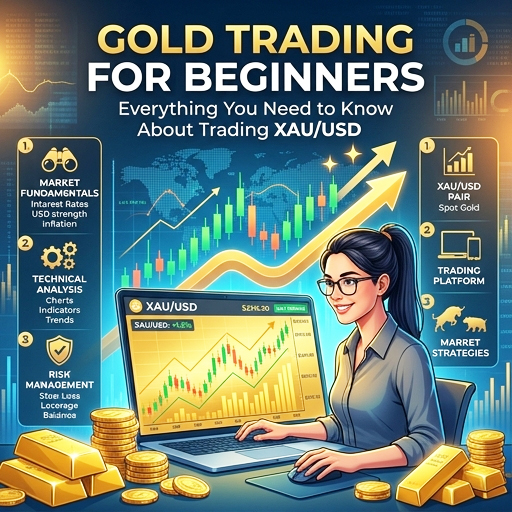
In this guide, we explore the fundamentals of gold trading and explain the essential concepts every beginner should understand before trading XAU/USD.
What Is Gold Trading (XAU/USD)?
Gold trading involves buying or selling financial instruments whose value is linked to the market price of gold.
In the Forex and CFD markets, gold is commonly represented by the symbol XAU/USD.
- XAU represents one troy ounce of gold.
- USD represents the United States dollar.
- XAU/USD indicates the price of one troy ounce of gold expressed in US dollars.
For example, if XAU/USD is trading at $4,000, this means that one troy ounce of gold is valued at approximately $4,000.
When traders believe gold prices will increase, they may consider opening a buy position. When they anticipate a decline, they may consider opening a sell position.
This flexibility allows traders to participate in both rising and falling markets.
It is important to distinguish between physical gold ownership and trading gold through CFDs. Physical gold involves owning the actual metal, whereas CFD trading involves speculating on price movements without taking ownership of the underlying asset.
Why Do Traders Choose Gold?
Gold attracts traders for several reasons, including its liquidity, global importance and sensitivity to economic developments.
- Gold’s Relationship with Economic Uncertainty
 Gold has historically been regarded as a safe-haven asset. During periods of financial instability, geopolitical uncertainty or declining confidence in traditional financial markets, some investors increase their exposure to gold.
This demand can support gold prices.
However, gold does not always increase during periods of uncertainty. Market liquidity requirements, interest rates, currency movements and investor positioning can sometimes produce the opposite result.
Understanding this distinction is essential when analysing the gold market.
- Gold and the US Dollar
One of the most important relationships in gold trading is the relationship between gold and the US dollar.
Gold is internationally priced in US dollars. Consequently, changes in the value of the dollar can influence the purchasing power of international gold buyers.
A weaker dollar can make gold relatively less expensive for buyers using other currencies, potentially increasing demand.
Conversely, a stronger dollar can place pressure on gold prices.
Although this relationship is frequently inverse, it is not guaranteed. Other economic factors can outweigh currency movements.
- Gold Offers Trading Opportunities in Different Market Conditions
Unlike some currency pairs that may remain relatively quiet during certain periods, gold can experience significant price movements following economic announcements, changes in monetary policy and geopolitical developments.
This creates opportunities for different trading approaches, including:
- Trend-following strategies.
- Breakout trading.
- Support and resistance trading.
- Short-term momentum strategies.
- Longer-term fundamental analysis.
Nevertheless, increased volatility also means greater financial risk.
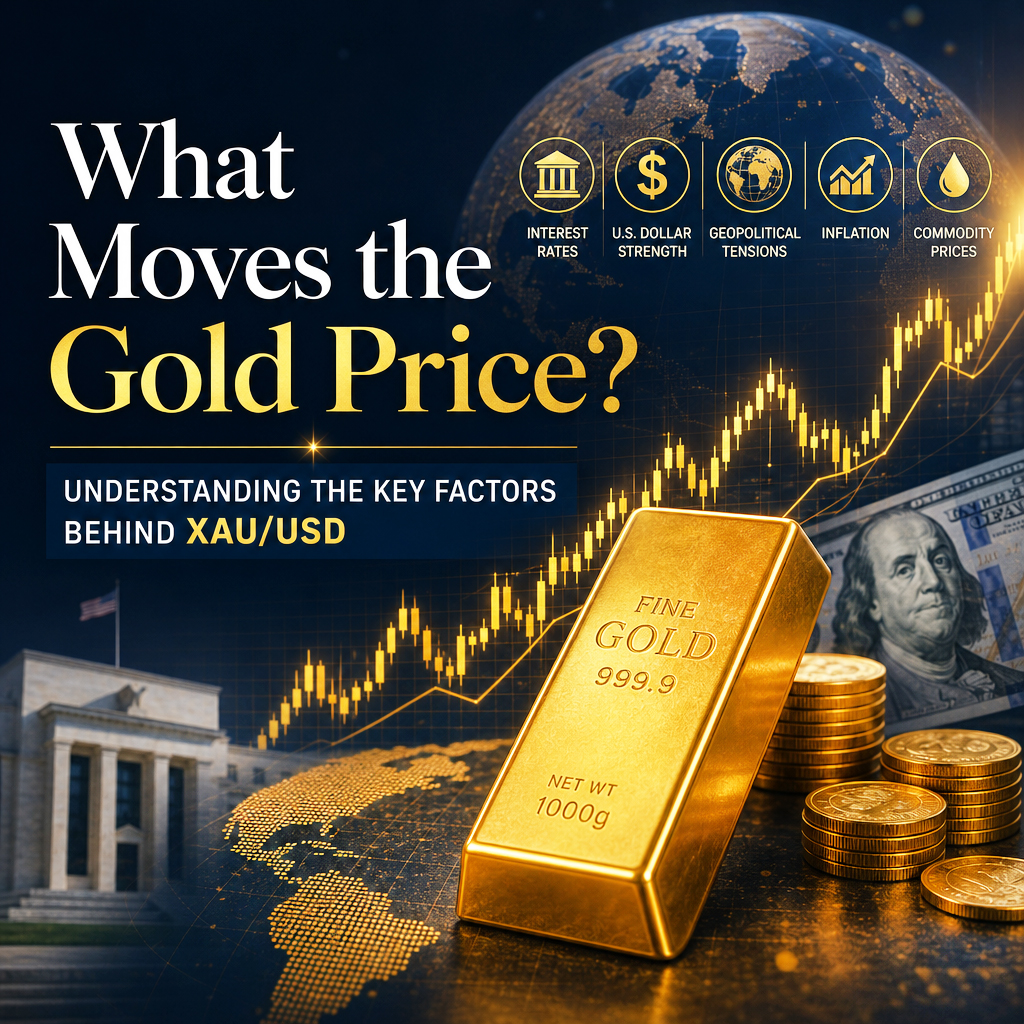
What Factors Influence the Gold Price?
Before opening a gold trading position, we should understand the economic forces that influence XAU/USD.
Interest rates: Gold does not pay interest or dividends. When interest rates and real bond yields increase, interest-bearing assets may become more attractive relative to gold. Lower real yields can have the opposite effect.
Inflation: Gold is frequently discussed as an inflation hedge because of its historical role as a store of value. However, inflation alone does not determine gold prices. Expected interest rates and real yields are also important.
Central bank activity: Central banks hold gold as part of their foreign exchange reserves. Their purchasing and selling decisions can influence longer-term demand.
Geopolitical developments: Conflicts, political instability and international trade tensions can increase demand for defensive assets.
Economic data: US employment reports, inflation figures, GDP data and Federal Reserve announcements can all influence gold prices.
By following these developments, traders can gain a better understanding of why gold moves and which events might influence future market behaviour.
Understanding the Basics of a Gold Trade
To trade XAU/USD, we need to understand several basic trading concepts.
Bid and Ask Prices
The bid price is the price at which the market or broker is willing to buy, while the ask price is the price at which the market or broker is willing to sell.
The difference between these prices is called the spread.
For example:
- Bid: $4,000.00
- Ask: $4,000.30
- Spread: $0.30
The spread represents one of the trading costs that should be considered before opening a position.
Leverage and Margin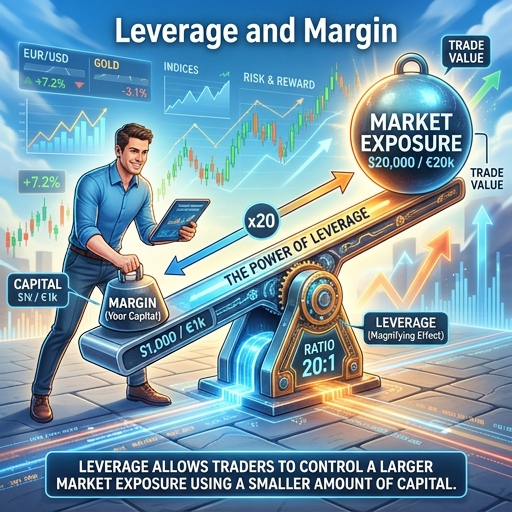
Leverage allows traders to control a larger market exposure using a smaller amount of capital.
For example, with leverage of 1:20, a hypothetical $1,000 margin could provide exposure equivalent to $20,000.
However, leverage magnifies both potential profits and potential losses. A relatively small movement in the gold price can therefore have a substantial impact on account equity.
Traders should always understand the applicable margin requirements and leverage restrictions before placing a trade.
Stop-Loss Orders
A stop-loss order is designed to close a position when the market reaches a specified price level.
It can help limit losses, although execution is not guaranteed at the exact requested price, particularly during periods of high volatility or market gaps.
Using stop-loss orders as part of a broader risk management strategy can help prevent individual trades from creating disproportionate losses.
How to Start Trading Gold
For beginners, establishing a structured approach is more important than searching for a perfect entry signal.
Some potential basic steps to follow:
- Learn how XAU/USD is quoted and how contract specifications work.
- Understand spreads, commissions, swaps and margin requirements.
- Study the main economic factors influencing gold prices.
- Practise reading gold price charts.
- Test a strategy on a demo account before risking real capital.
- Establish clear rules for position sizing and risk management.
- Maintain a trading journal to evaluate decisions and performance.
A demo account can provide valuable experience without exposing real capital to market risk. However, demo trading cannot fully reproduce the psychological pressure associated with real-money trading.
Common Mistakes Beginners Should Avoid
Gold can move rapidly, particularly around major economic announcements. This makes it important to avoid common trading mistakes.
Using excessive leverage: Large positions can result in substantial losses from relatively small market movements.
Trading without a plan: Entering positions based on emotion or isolated price movements can lead to inconsistent decisions.
Ignoring economic news: Major announcements can cause sudden volatility and unpredictable price movements.
Overtrading: Opening too many positions can increase transaction costs and make risk management more difficult.
Chasing the market: Entering a position after a significant price movement without assessing the potential risk-to-reward ratio can result in poor trade selection.
Conclusion: Building a Strong Foundation in Gold Trading
Gold trading offers an interesting way to explore the relationship between global economics, financial markets and investor behaviour.
By understanding XAU/USD, following the US dollar, monitoring interest rates and learning basic technical analysis, beginners can develop a more informed approach to the gold market.
However, there is no guaranteed strategy for predicting gold prices. Even experienced traders encounter losing positions, unexpected market movements and periods of uncertainty.
 The foundation of a sustainable trading approach should therefore be education, preparation, discipline and effective risk management.
Risk notice: Trading Forex and CFDs involves significant risk and may result in the loss of your invested capital. Leverage can magnify both profits and losses. Please ensure that you understand the risks before trading.