
 skypilot
 skydiver

 bluethunder
Introduction: Understanding the Technology Behind Bitcoin
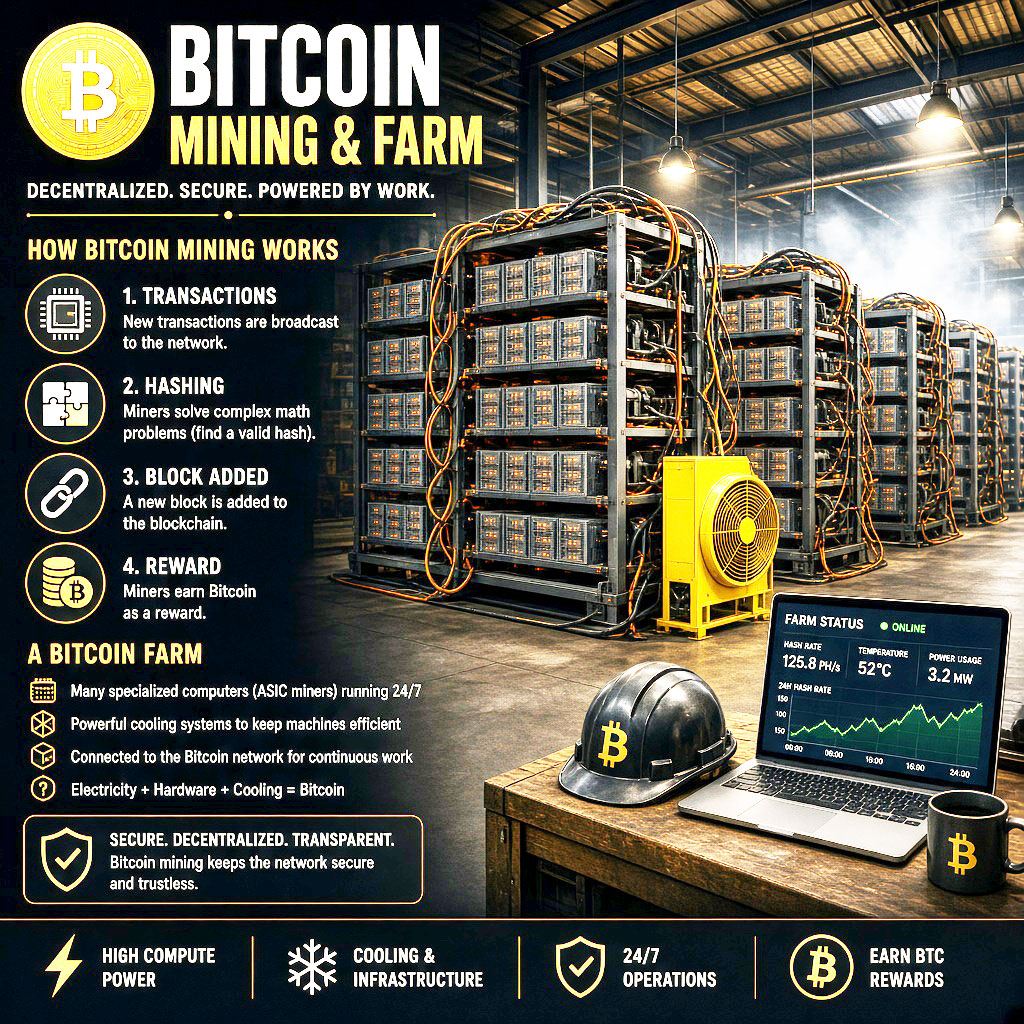 Bitcoin has transformed the way people think about money, digital payments and decentralised financial systems. Since its introduction in 2009, it has developed from an experimental digital currency into a globally recognised financial asset with an extensive international network.
At the centre of this technology is Bitcoin mining.
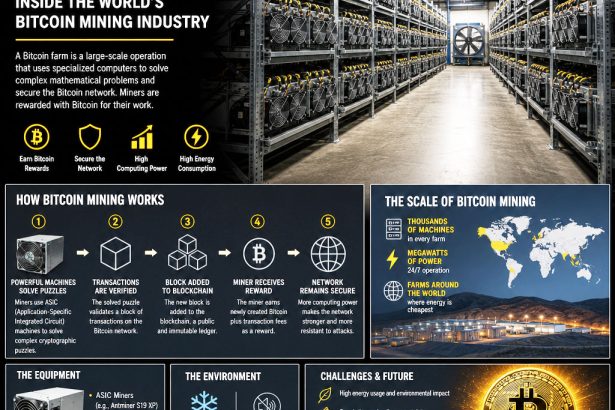
Although the term mining may suggest digging for gold or extracting valuable resources from the ground, Bitcoin mining is an entirely digital process. It involves specialised computers performing enormous numbers of calculations to help secure the Bitcoin network, validate transactions and add new information to the blockchain.
But why is this process necessary? Who decides which transactions are legitimate? Where do newly created bitcoins come from? And why are mining companies willing to invest millions in computers and electricity to participate?
To understand Bitcoin properly, we need to understand how its mining system works. In this article, we explore Bitcoin mining from the ground up, including blockchain technology, proof of work, mining hardware, mining difficulty and the process through which new bitcoins enter circulation.
What Is Bitcoin Mining?
Bitcoin mining is the process through which new blocks of transactions are added to the Bitcoin blockchain using a system called Proof of Work (PoW).
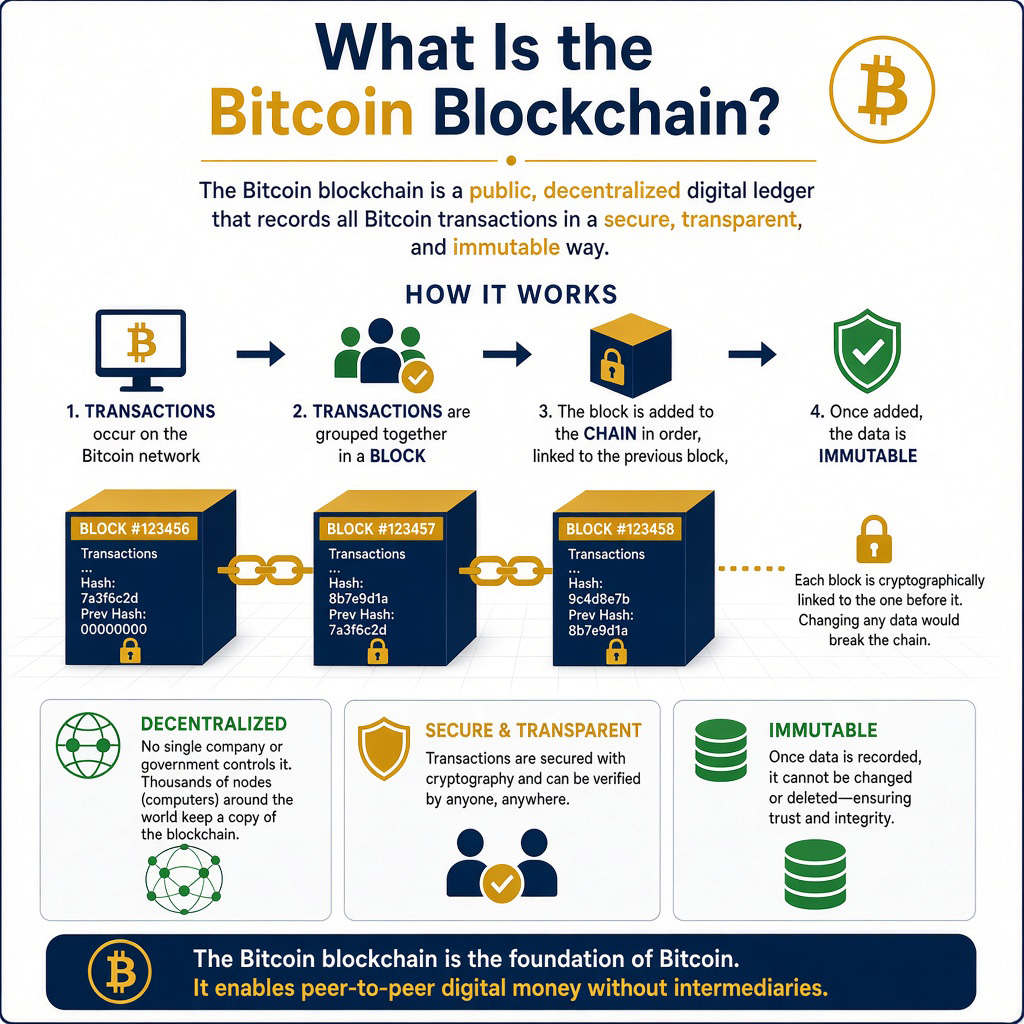
The Bitcoin blockchain is a decentralised digital ledger that records transactions across a network of computers. Unlike traditional banking systems, Bitcoin does not depend on a central bank or financial institution to maintain its transaction history.
Instead, independent participants operate computers called nodes, which communicate with one another and independently verify whether transactions and blocks follow the network’s rules.
Miners perform a specialised role within this system. They compete to produce valid blocks by using computing power to solve a cryptographic challenge. The successful miner receives the right to add the block to the blockchain, provided the block is accepted by the network.
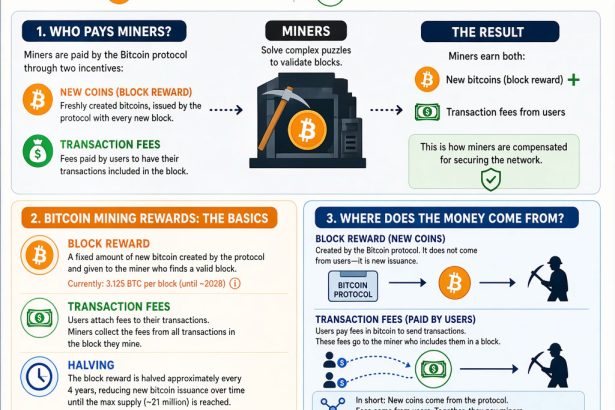
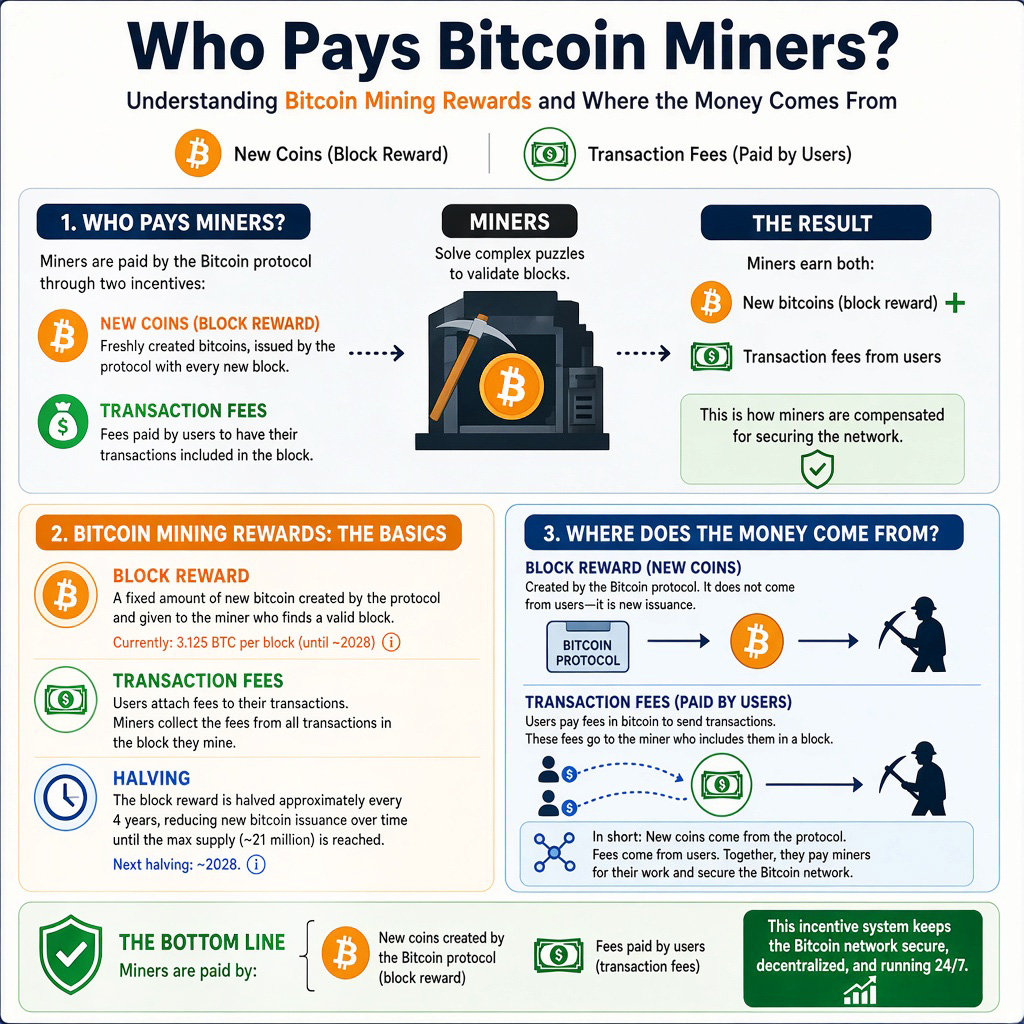
In return, the miner can receive newly created bitcoins and transaction fees. This process serves two important purposes:
- It introduces new bitcoins into circulation according to a predetermined monetary schedule.
- It makes it economically expensive to manipulate the transaction history.
 What Is the Bitcoin Blockchain?
To understand mining, we first need to understand the blockchain. A blockchain is a continuously growing sequence of blocks containing transaction information. Each block contains several important components, including:
- A reference to the previous block.
- A collection of Bitcoin transactions.
- A timestamp.
- A difficulty target.
- A cryptographic hash.
Each block is connected to the previous one through cryptographic hashing. This creates a chronological structure in which changing an earlier block would require an attacker to redo the proof of work for that block and the subsequent blocks, while also competing against the honest network.
The longer the chain becomes, the more computational work would generally be required to rewrite its history. This is one of the reasons Bitcoin is considered difficult to manipulate.
Why Is the Blockchain Decentralised?
Traditional payment systems normally depend on central organisations that maintain transaction records. Bitcoin takes a different approach. Its transaction history is maintained through a distributed network of independent computers.
These computers follow the same protocol rules and independently validate information received from other participants. This means there is no single central organisation that can simply decide to create additional bitcoins or approve an invalid transaction. The decentralised structure is one of Bitcoin’s defining characteristics.
How Does Bitcoin Mining Work Step by Step?
Bitcoin mining may sound complicated, but the basic process can be explained through several stages.
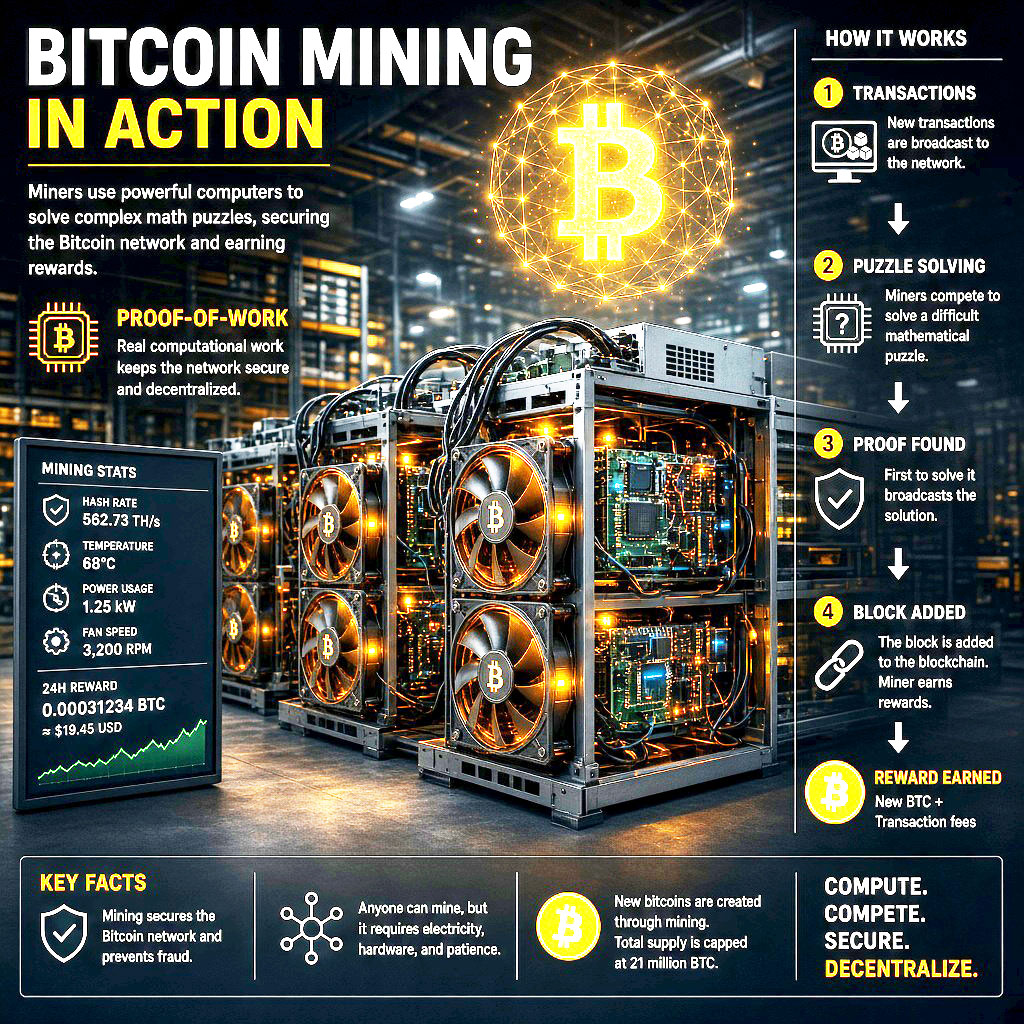
Step 1: Bitcoin Transactions Are Broadcast
When someone sends Bitcoin to another wallet, the transaction is broadcast to the Bitcoin network. The transaction contains information about the transfer, including the relevant inputs, outputs and digital signatures.
Network nodes examine the transaction to determine whether it follows the Bitcoin protocol rules. Valid transactions can enter the network’s collection of unconfirmed transactions, commonly called the mempool.
Step 2: Miners Select Transactions
Miners collect eligible transactions and assemble them into a candidate block. They generally have an economic incentive to prioritise transactions offering higher fees relative to the block space they occupy. A block has a limited capacity, so not every waiting transaction can necessarily be included immediately.
The miner must also include a special transaction known as the coinbase transaction. Despite its name, this is not related to the cryptocurrency exchange. It is the transaction through which the miner claims the permitted block subsidy and the fees associated with the included transactions.
Step 3: Mining Computers Perform Calculations
Once the candidate block has been assembled, mining hardware begins performing cryptographic calculations. Bitcoin uses the SHA-256 hashing algorithm. A hash function takes information as input and produces a fixed-length output.
Even a small change to the input produces a completely different hash. Miners repeatedly generate hashes from block header information while varying certain data, including a value known as the nonce.
The objective is to find a hash that satisfies the current network difficulty target. This is not a conventional mathematical puzzle with a known shortcut. The process involves repeatedly trying different values until a valid result is discovered.
Step 4: A Miner Finds a Valid Hash
When a miner discovers a hash that meets the network’s target, it can broadcast the completed block to the Bitcoin network. Other nodes independently check whether:
- The proof of work is valid.
- The transactions follow the protocol rules.
- No bitcoins have been spent more than once.
- The block does not exceed the permitted subsidy.
- The block correctly references the previous block.
If the block is valid, nodes can accept it and build upon it. The successful miner can then claim the block subsidy and included transaction fees through the coinbase transaction.
Step 5: The Blockchain Grows
Once accepted, the new block becomes part of the Bitcoin blockchain. The transactions included in that block receive their first confirmation. As additional blocks are added, the transaction receives further confirmations.
This makes it increasingly difficult for someone to reverse the transaction through a competing chain. The process continues around the clock, with Bitcoin targeting an average block interval of approximately ten minutes. Importantly, ten minutes is a long-term average rather than a guaranteed schedule for every individual block.
What Is Proof of Work?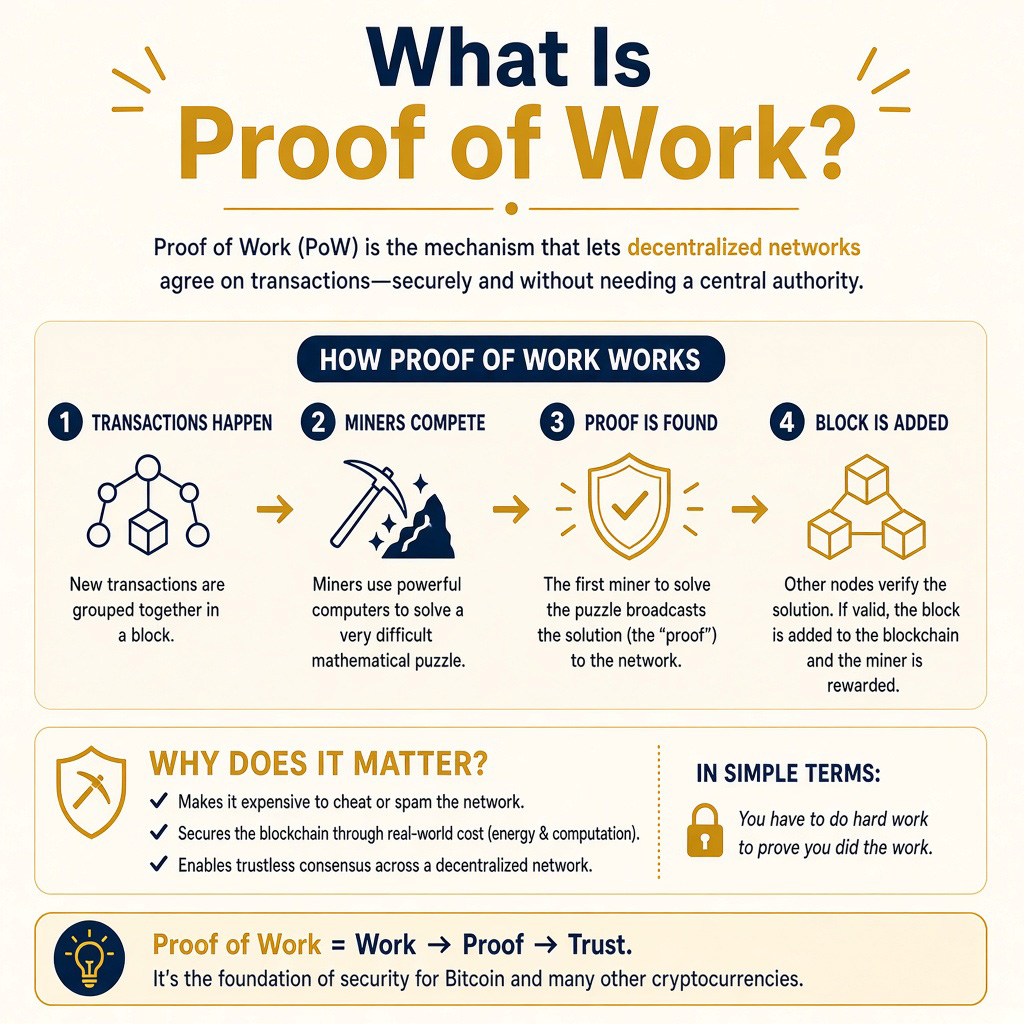
Proof of Work is the mechanism that makes Bitcoin mining possible. It requires miners to demonstrate that they have performed computational work by finding a hash that satisfies the network’s difficulty target. The system creates an economic cost for producing blocks.
A miner cannot simply claim to have created a valid block. The network can independently verify the proof of work with very little computational effort. This difference is important.
Finding a valid hash can require enormous computing resources, but checking whether that hash meets the required target is comparatively straightforward.
Why Does Bitcoin Use Proof of Work?
Proof of Work helps Bitcoin operate without requiring participants to trust a central authority. It provides a mechanism for deciding which valid transaction history should be accepted when competing versions of the blockchain exist.
The network follows the valid chain with the greatest accumulated proof of work. Consequently, an attacker attempting to rewrite historical transactions would need to produce an alternative chain with sufficient proof of work to overtake the honest network. The larger the network’s total mining power, the more expensive such an attack generally becomes.
What Is Bitcoin Mining Difficulty?
Bitcoin mining difficulty determines how challenging it is for miners to find a valid block hash. The network automatically adjusts difficulty approximately every 2,016 blocks, which corresponds to roughly two weeks.
If blocks have been produced faster than the ten-minute target, difficulty increases. If blocks have been produced too slowly, difficulty decreases. This adjustment helps maintain a relatively consistent block production rate despite changes in the total computing power participating in mining.
For example, if many new mining machines join the network, the total hashrate increases. Without difficulty adjustments, blocks would initially be found more frequently. The difficulty adjustment helps compensate for that additional computing power.
What Is Bitcoin Hashrate?
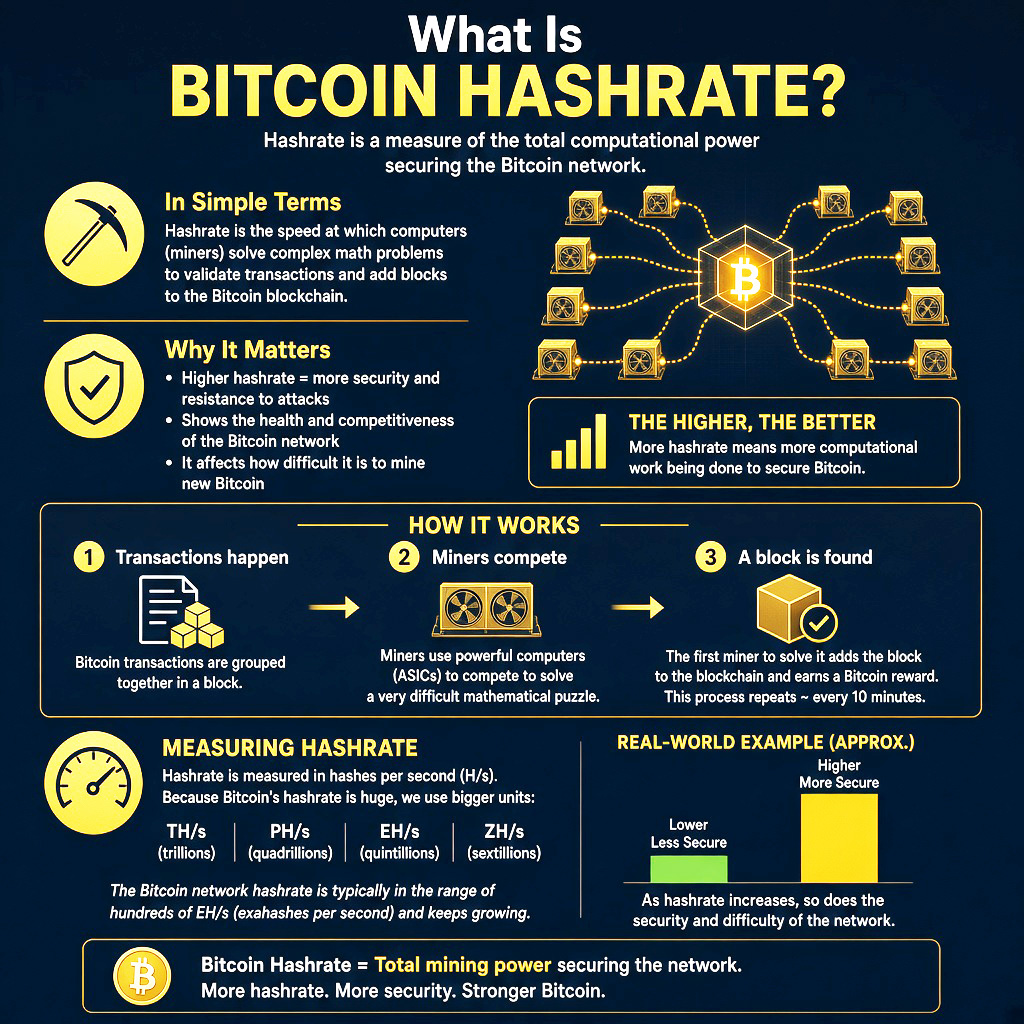 Hashrate measures the amount of computational power being used to perform mining calculations. It is generally expressed in:
- Hashes per second (H/s).
- Terahashes per second (TH/s).
- Petahashes per second (PH/s).
- Exahashes per second (EH/s).
One exahash represents one quintillion hashes per second. The total Bitcoin network hashrate provides an indication of the amount of computational power participating in mining.
A higher hashrate generally means that more computing resources are competing to produce valid blocks. However, hashrate alone does not tell us exactly how secure the network is. Hardware ownership, miner distribution, electricity access and other factors also matter.
What Equipment Is Used to Mine Bitcoin?
Bitcoin mining has changed significantly since the network was launched. In its early days, mining could be performed using ordinary computer processors. As competition increased, miners began using graphics processing units and later specialised hardware.
Today, professional Bitcoin mining primarily uses Application-Specific Integrated Circuits (ASICs). These machines are designed specifically to perform the calculations required by Bitcoin mining.
Why Are ASIC Machines So Important?
ASIC machines offer substantially higher mining efficiency than ordinary computers. They are designed to produce large numbers of SHA-256 hashes while consuming less electricity per unit of computing power than general-purpose hardware. Their performance is commonly measured in terahashes per second and their efficiency in joules per terahash.
Mining companies constantly evaluate newer hardware because electricity is one of their largest operational expenses. A more efficient machine can potentially produce more mining power for the same amount of electricity.
Can Anyone Mine Bitcoin?
Technically, anyone can participate in Bitcoin mining if they have suitable hardware, electricity and an internet connection. However, profitable industrial-scale mining requires substantial investment. The competition is intense, and modern mining is dominated by specialised equipment and large operations with access to competitive electricity prices.
Individual miners can also join mining pools, where they combine their computing power with other participants. This provides a more regular distribution of smaller rewards compared with attempting to mine blocks independently.
Is Bitcoin Mining the Same as Creating Money?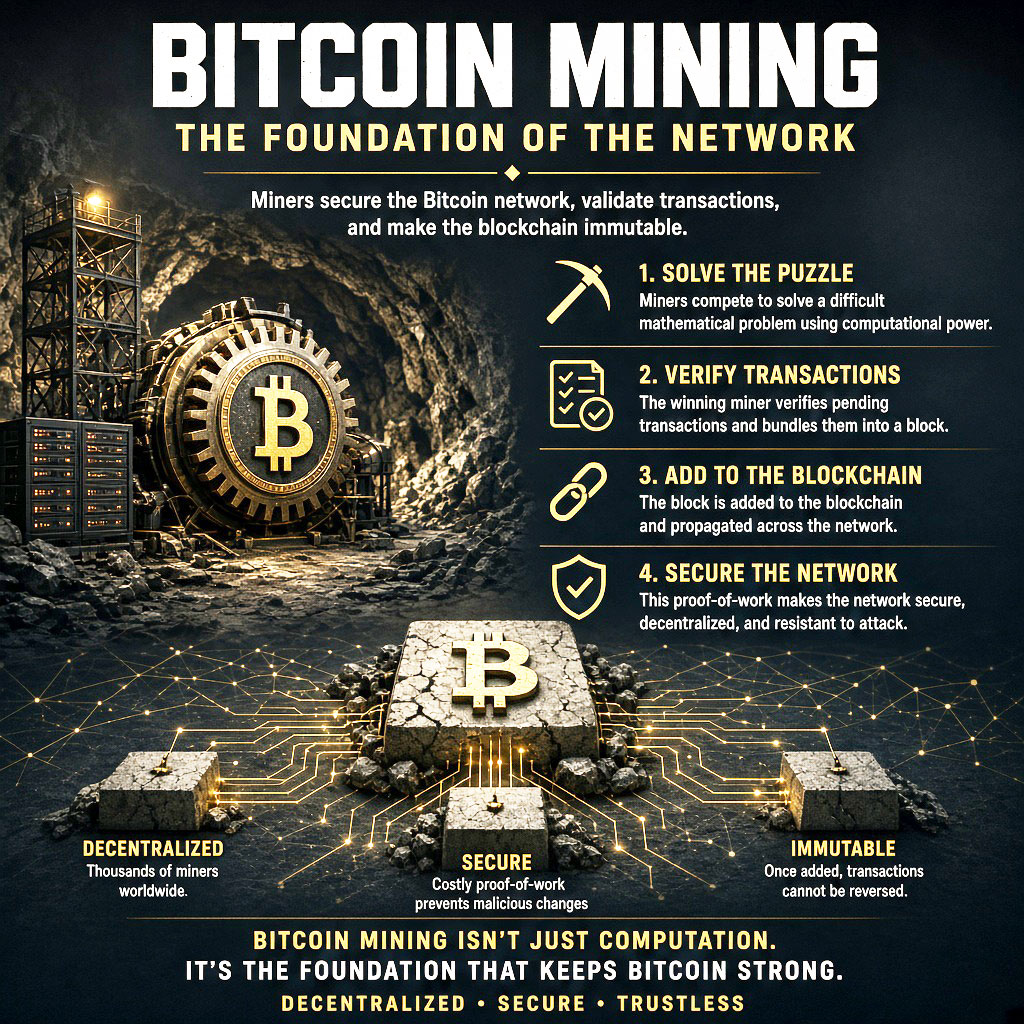
Not exactly. Although mining introduces new bitcoins into circulation, miners cannot create unlimited amounts of Bitcoin. The network follows a predetermined issuance schedule. Every 210,000 blocks, the block subsidy is reduced by 50%. This event is known as the Bitcoin halving.
The most recent halving occurred in April 2024, reducing the block subsidy from 6.25 BTC to 3.125 BTC. The next halving is expected around 2028. The maximum Bitcoin supply is approximately 21 million coins. This fixed issuance schedule is one of the most important differences between Bitcoin and traditional monetary systems.
Conclusion: Bitcoin Mining Is the Foundation of the Network
Bitcoin mining is much more than a way to earn cryptocurrency. It is a fundamental part of the system that allows Bitcoin to operate without a central authority. Through Proof of Work, specialised computers compete to produce new blocks, transactions are added to a shared public ledger and new bitcoins enter circulation according to a predetermined schedule.
Understanding blockchain technology, mining difficulty, hashrate and ASIC hardware provides an excellent starting point for exploring the wider Bitcoin industry. As mining technology continues to develop and the industry becomes increasingly professional, Bitcoin mining will remain an important part of the discussion surrounding digital currencies and decentralised financial systems.
Disclaimer: Bitcoin mining involves technical, financial, operational and regulatory risks. Mining profitability is not guaranteed, and hardware and electricity investments can result in financial losses.